
TCP vs UDP: When to Use What, and How TCP Relates to HTTP
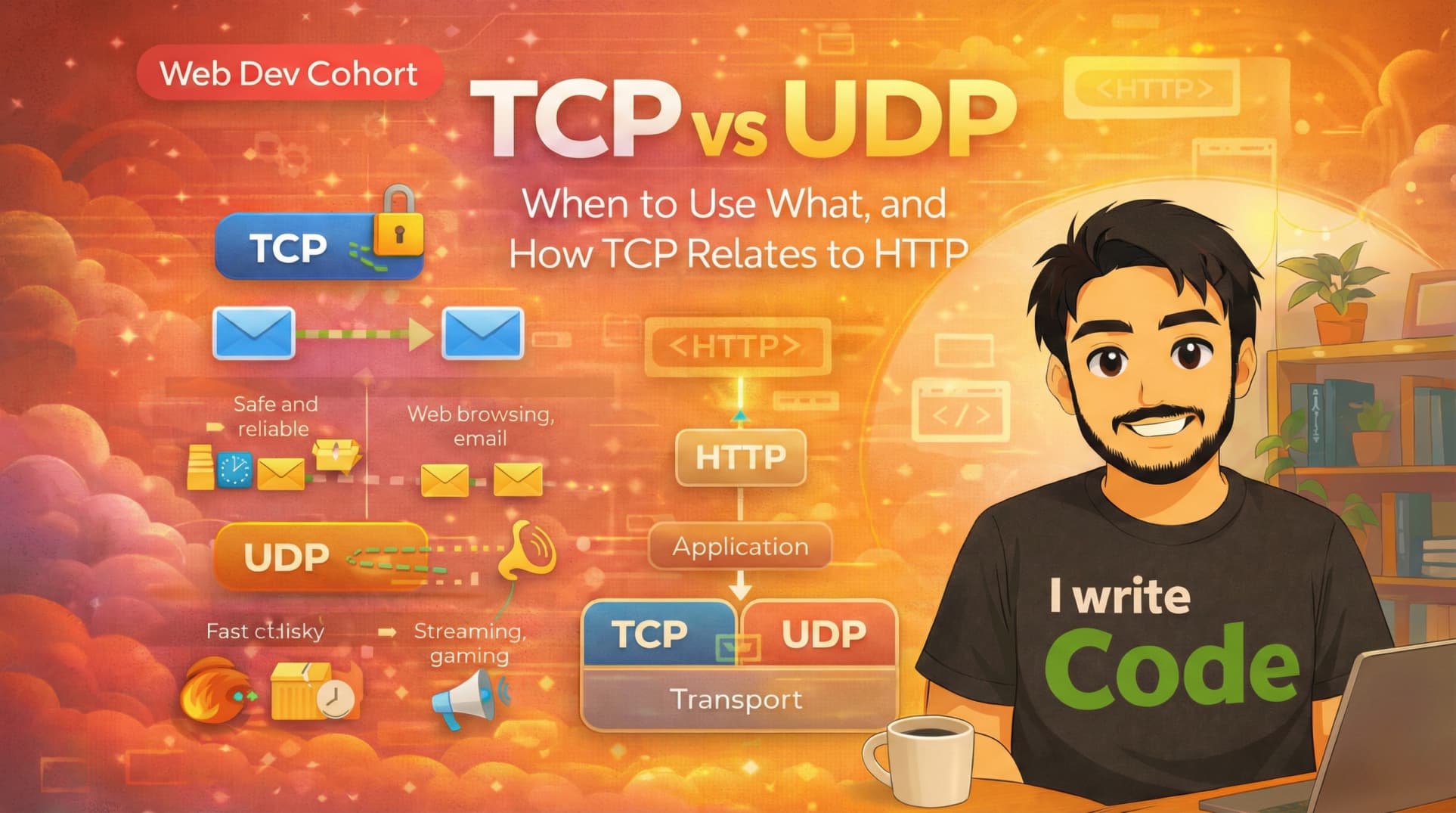
TCP and UDP are the most famous data sharing protocols, Across the Internet. These are widely used to share data one computer system to another.
In this blog We will be understand what is the difference between TCP and UDP and how HTTP is related to TCP and how HTTP work.
First, let’s we understand what is TCP and UTP.
TCP (Transmission Control Protocol)
This is the most common and reliable protocol for share data on the Internet. It's insured the safety of the data. Make the proper connection before sending any data and guarantee that every package of the data is reach on the receiver device successfully. This is use the three way Handshake for ensuring the safety of the data. First a receiver send a request, then sever make a secure connection and send data after that make the acknowledgement.
You can learn more about TCP in my this blog: TCP Working: 3-Way Handshake & Reliable Communication
When to use
We use this when we need reliability and safety of the data, ensuring 100% accuracy proper error handling, mainly used in browser, file sharing.
UDP (User Datagram Protocol)
This is the faster version of TCP It don't care about anything package loss or security. It's just want to know the address of the receiver and start sending the data. in this if internet is slow we have loss of data and connection break, this is unreliable way of transfer data.
When to use
when we need to send the data fast, quality of the data is not that important, we can compromise with that, if some package is loss it’s not affect too much. Mainly use in voice and video calls, Online gaming.
Key differences between TCP and UDP

Reliability:
TCP is guaranteed and reliable. Every package of data arrives safely at the receiver. UDP is not guaranteed. Some packages can be lost during transmission.Speed:
TCP is slower because it checks every packet, confirms delivery, and handles errors. UDP is faster because it simply sends data without checking anything.Connection:
TCP needs a handshake before starting communication, so a proper connection is created first. UDP does not need any handshake and starts sending data immediately.Order:
In TCP, data always arrives in the correct order. In UDP, data can arrive in any order and may not be arranged properly.Best Used For:
TCP is mainly used for web browsing, email, and file sharing where accuracy is important. UDP is mainly used for video calls, live streaming, and gaming where speed is more important than perfect accuracy.How HTTP is related to TCP
HTTP (HyperText Transfer Protocol) is use by browsers and servers use to talk to each other and exchange website data. But HTTP itself cannot send data directly on the network. For sending data safely from one computer to another, HTTP mostly depends on TCP.
When you open any website, first a TCP connection is created between your browser and the server using the 3-way handshake. After this secure connection is ready, HTTP sends its requests and receives responses through this TCP connection. Because TCP is reliable, HTTP can be sure that the web pages, images, and data reach correctly and in proper order.

So, HTTP works on top of TCP. TCP handles connection, safety, order, and error checking, and HTTP only focuses on what data to send and how to format it. That is why web browsing is stable and reliable in most cases.
Conclusion

Choosing between TCP and UDP depends on what you need. If you want safety and 100% accuracy, go with TCP. If you want raw speed and can handle some data loss, UDP is your friend. Understanding these helps you see how the "invisible" parts of the internet work every time you click a link!