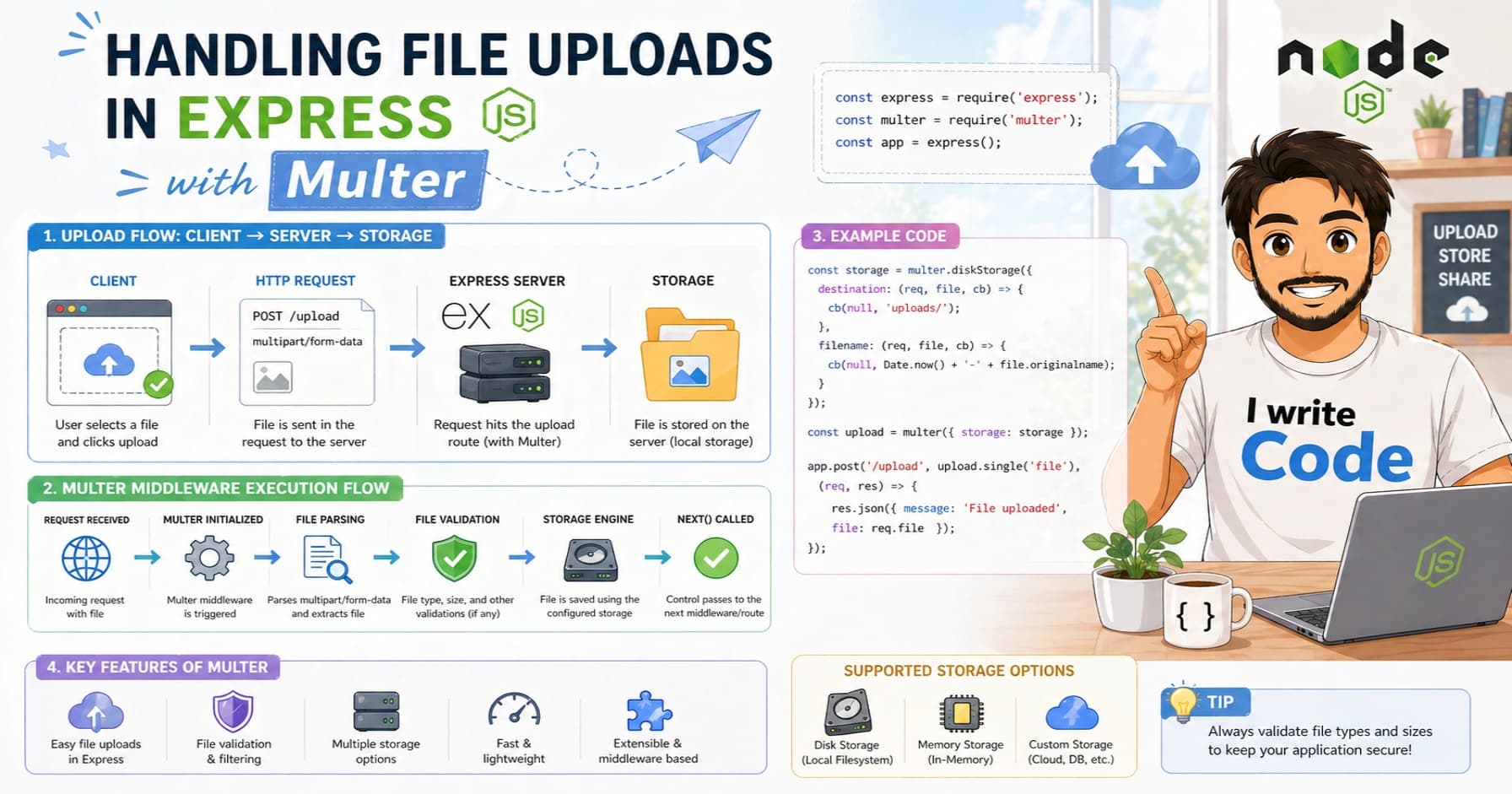
Handling File Uploads in Express with MulterAcross the web, almost every modern application needs to handle file uploads. Whether it is a profile picture, a resume, or a product image, users expect to upload files smoothly. But if you have everMay 3, 2026·6 min read·8
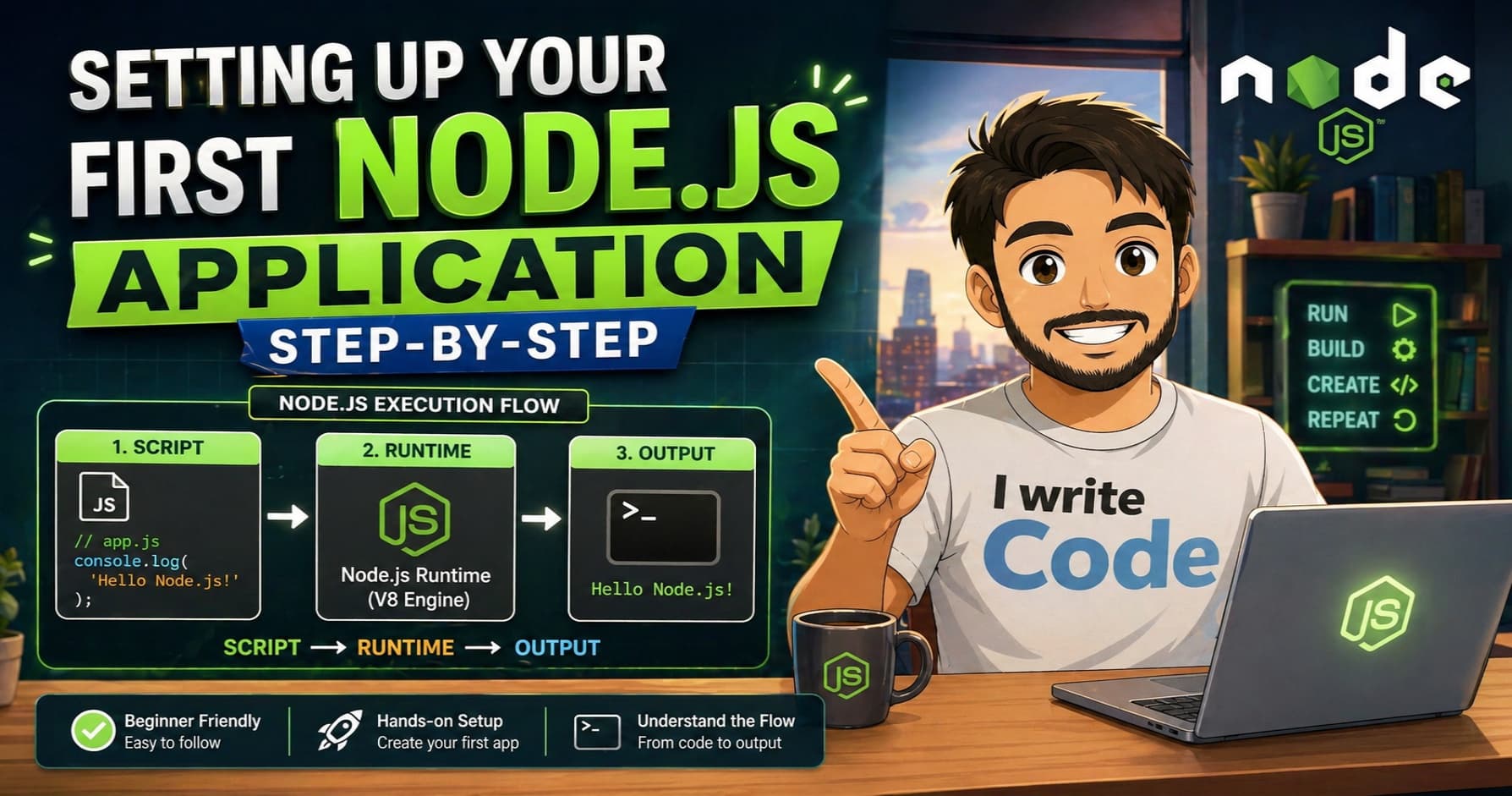
Setting Up Your First Node.js Application Step-by-StepAcross the Internet, every modern web application, API, or backend service you interact with often runs on JavaScript outside the browser. But browsers are not the only place JavaScript lives. To run Apr 28, 2026·6 min read·22
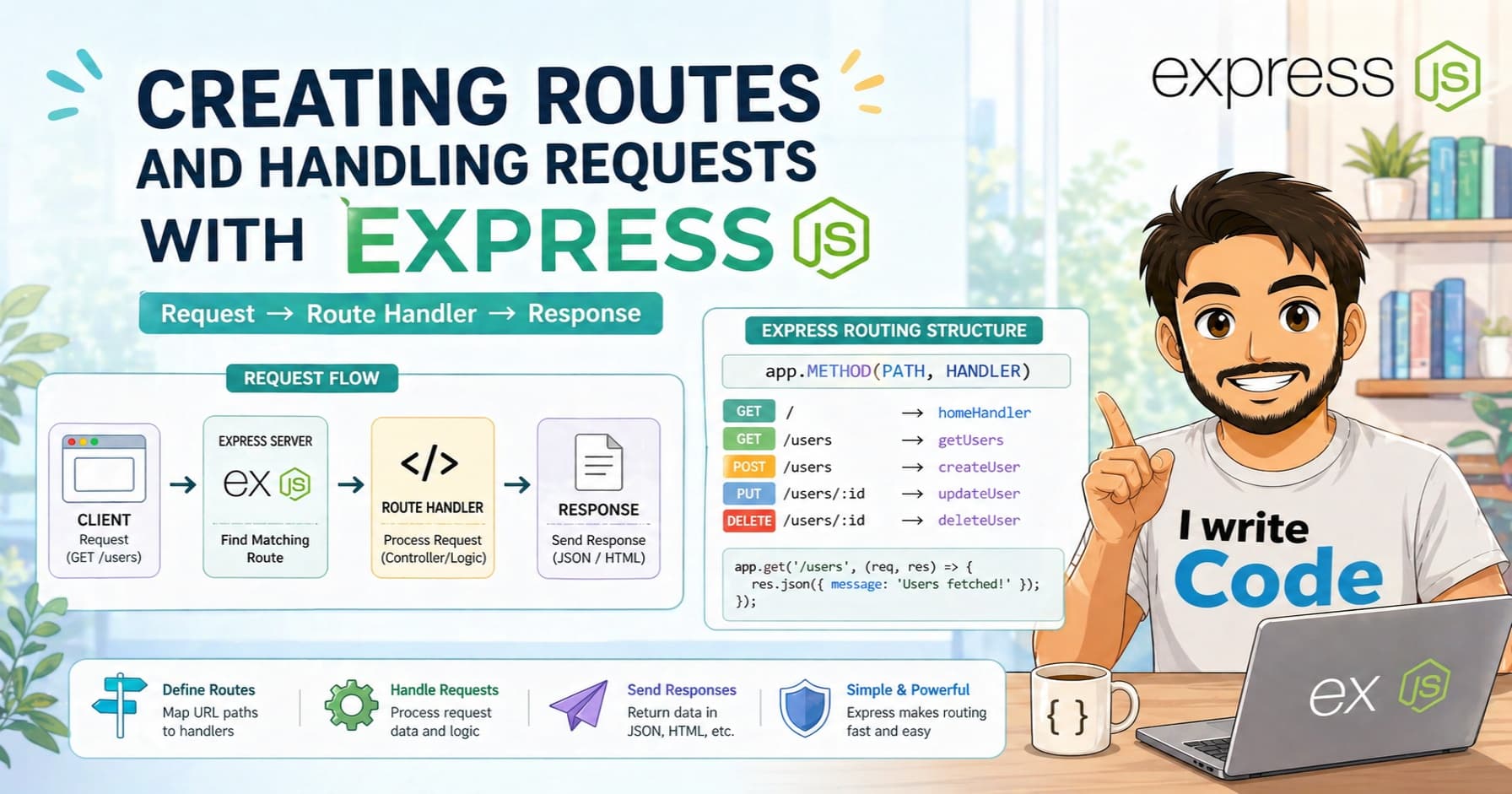
Creating Routes and Handling Requests with ExpressAcross the web, every application you interact with relies on servers receiving requests and sending back responses. But writing raw Node.js servers can feel repetitive, verbose, and difficult to manaApr 28, 2026·6 min read·13
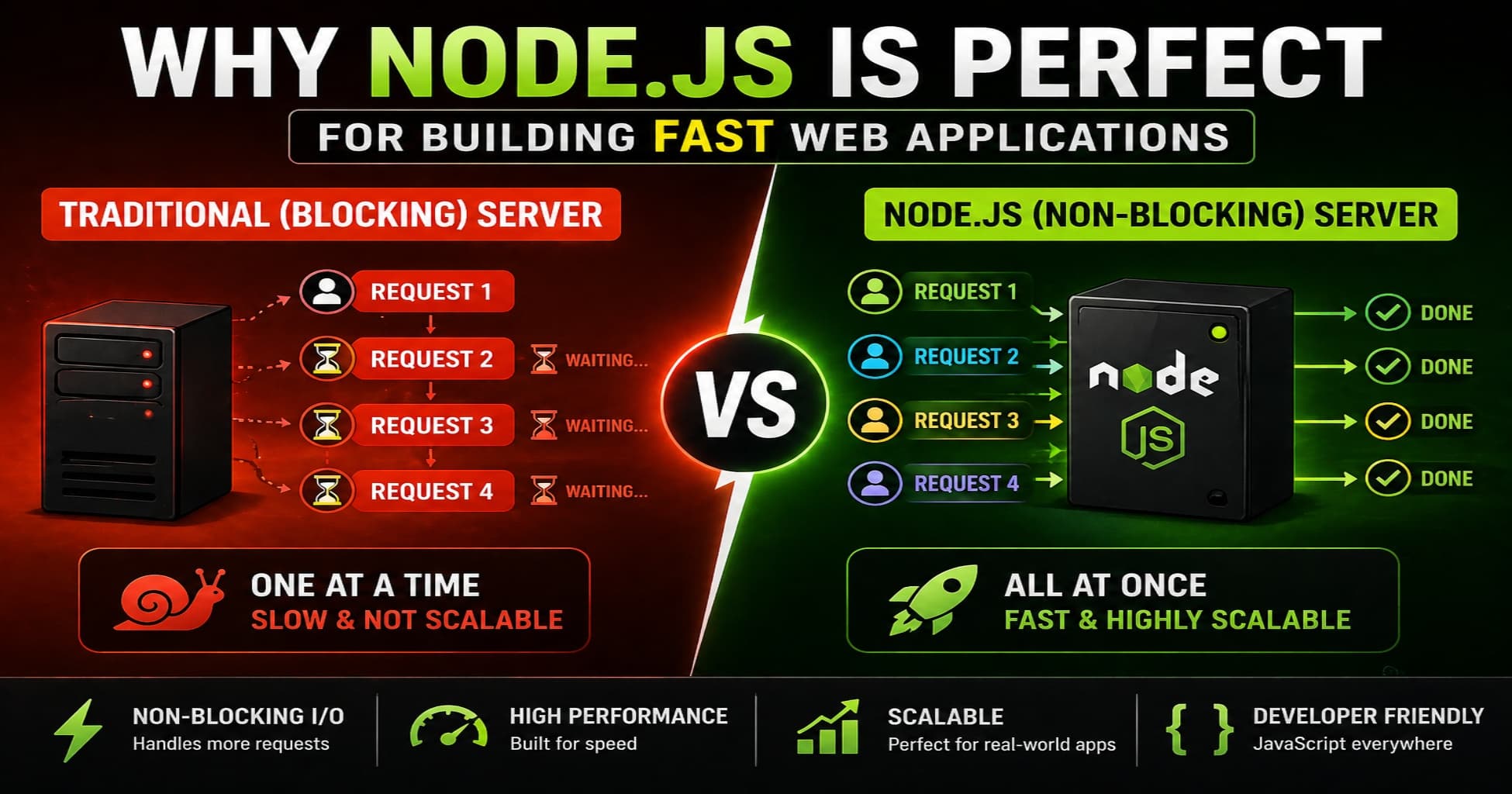
Why Node.js is Perfect for Building Fast Web ApplicationsIf you’ve ever wondered how modern web applications handle thousands of simultaneous users without crashing or slowing down, you’ve likely stumbled upon Node.js. Originally released in 2009, Node.js tApr 28, 2026·7 min read·23
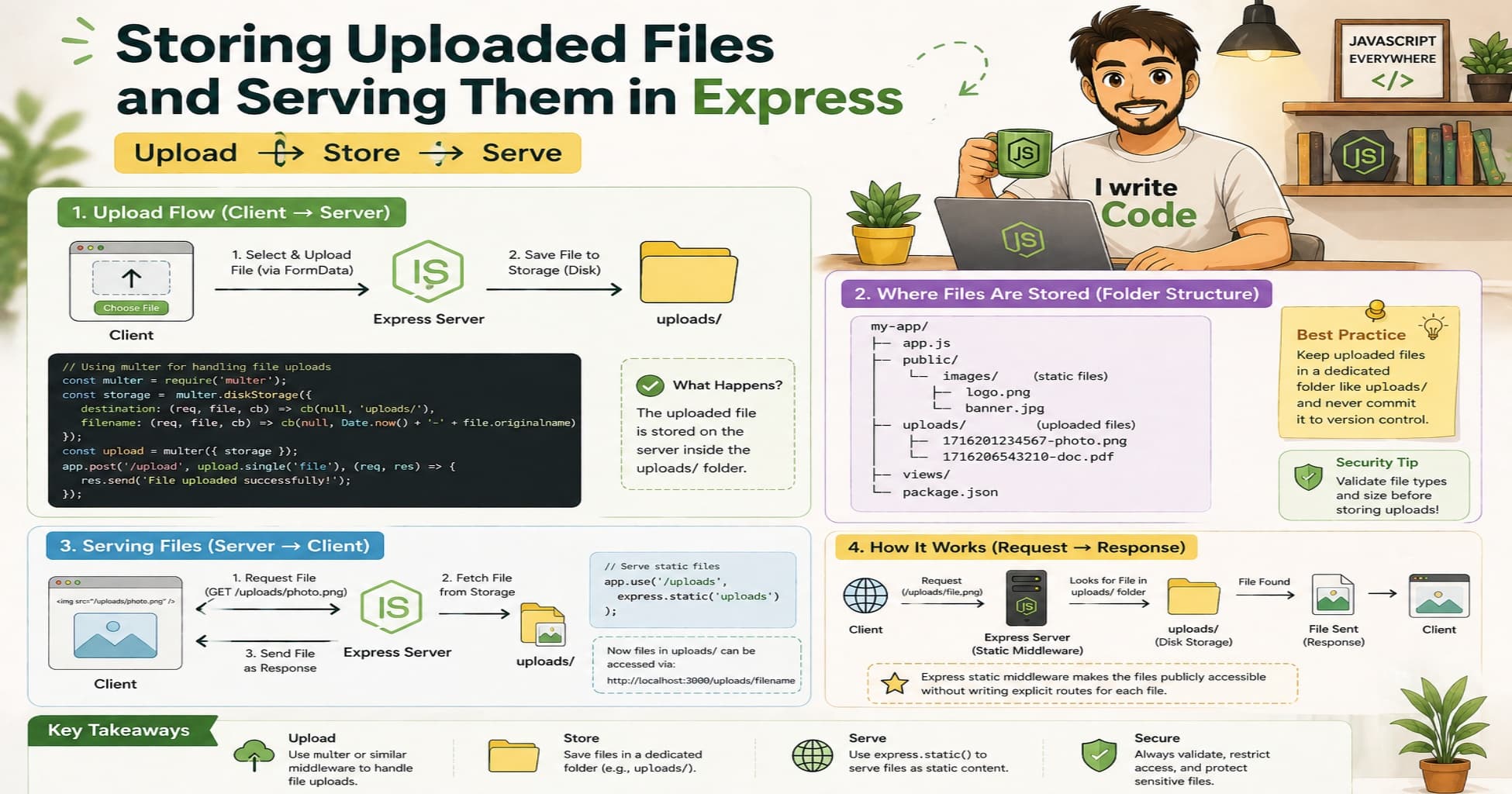
Storing Uploaded Files and Serving Them in ExpressEvery time a user uploads a profile picture, shares a document, or attaches a resume, a hidden pipeline kicks in behind the scenes. But have you ever wondered where those files actually land? How doesApr 28, 2026·6 min read·3
Sessions vs JWT vs Cookies: Understanding Authentication ApproachesAcross the web, every time a user logs into a website, the server needs a way to remember who they are. But computers do not remember people by name. They need a reliable method to identify users acroApr 28, 2026·6 min read·5
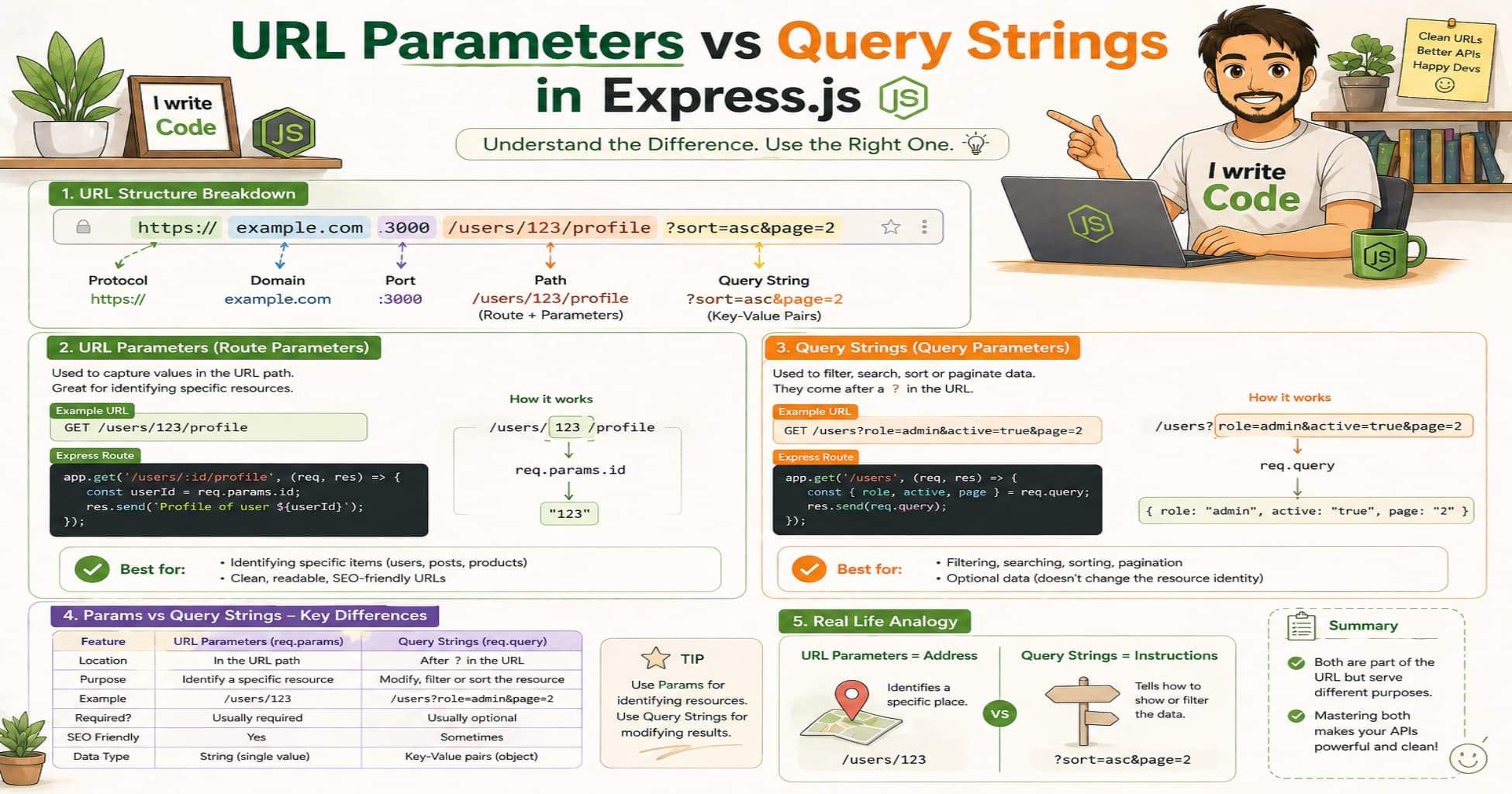
URL Parameters vs Query Strings in Express.jsEvery web application relies on URLs to navigate, fetch data, and trigger actions. But not all URLs are structured the same way. Some carry data directly in the path, while others append information aApr 27, 2026·6 min read·2